Ninjasoft. ROBOTICS PORTFOLIO
Robotics Portfolio · Ninjasoft ICT Hub

Our Robotics & Innovation Portfolio

Built by learners, guided by Ninjasoft ICT Hub. From smart cars to automated homes — see what we create, how it works, and how we teach it.

Coding Electronics Sensors Automation
Featured Builds

Featured Projects

Each project is a journey from concept to creation, built by our students with guidance from our trainers.

PROJECT 01   ROBOTICS · IOT

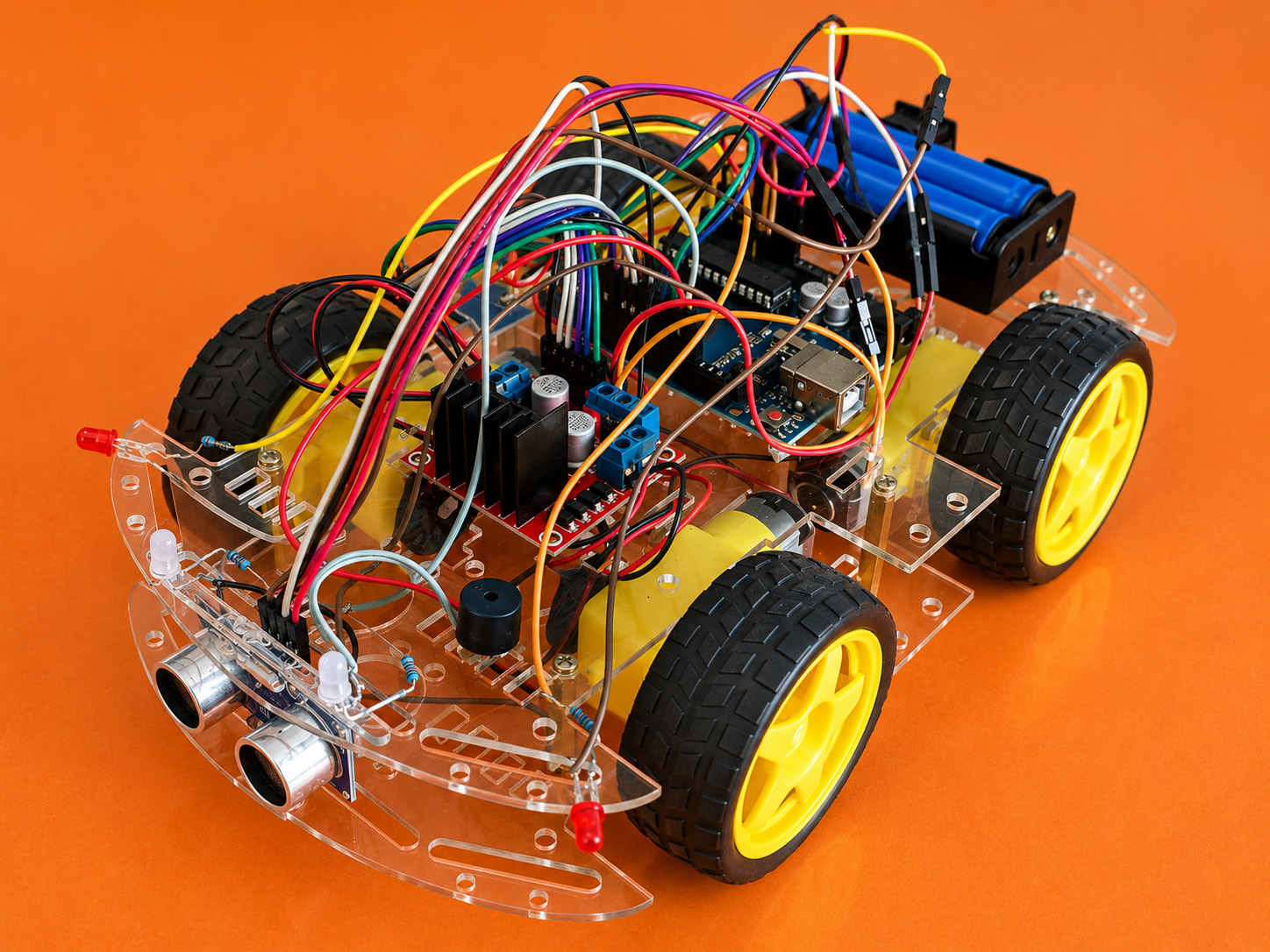
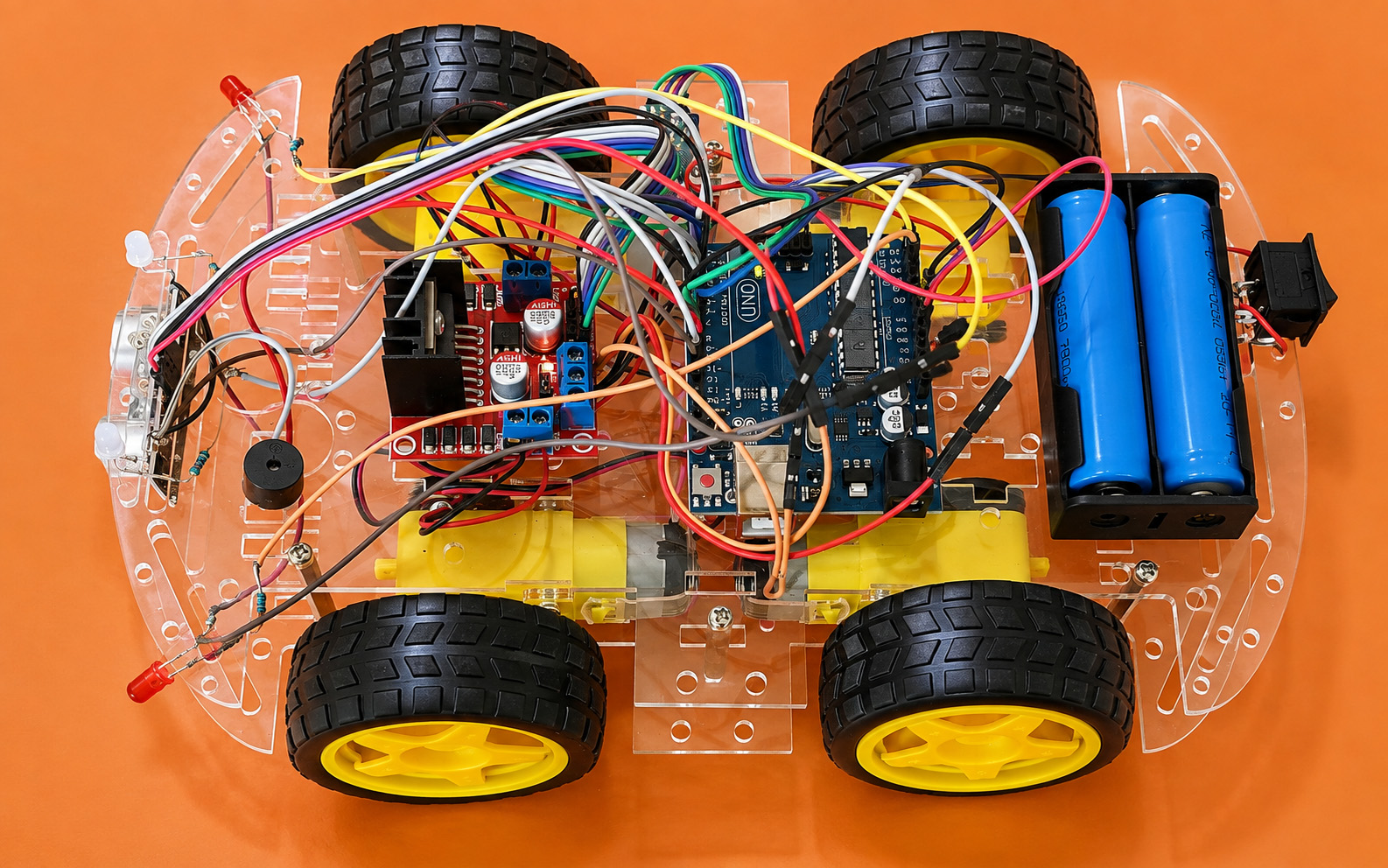
Smart Car: Bluetooth & Voice Controlled

This is the ultimate learner's robotics project. A fully functional car controlled via a mobile app using Bluetooth and even voice commands. Built by students at Ninjasoft, it's a showcase of practical programming and electronics integration.

ControlBluetooth app & voice commands
NavigationObstacle avoidance with ultrasonic sensor
FeaturesSpeed control, direction indicators, headlights & horn
TechArduino UNO, HC-05 Bluetooth, L298N motor driver, HC-SR04
See How It's Built

What Learners Gain

Electronics & Wiring

Learners wire motors, sensors, and microcontrollers, understanding power distribution and signal flow.

Programming Logic

They code in Arduino C++ to process sensor data, control motors, and respond to Bluetooth commands.

Problem-Solving

Troubleshooting motor stalls, sensor errors, and connection issues is a core part of the build.

Team Collaboration

Students work in teams, dividing tasks like mechanical assembly, programming, and testing.

PROJECT 02   AUTOMATION · SENSING

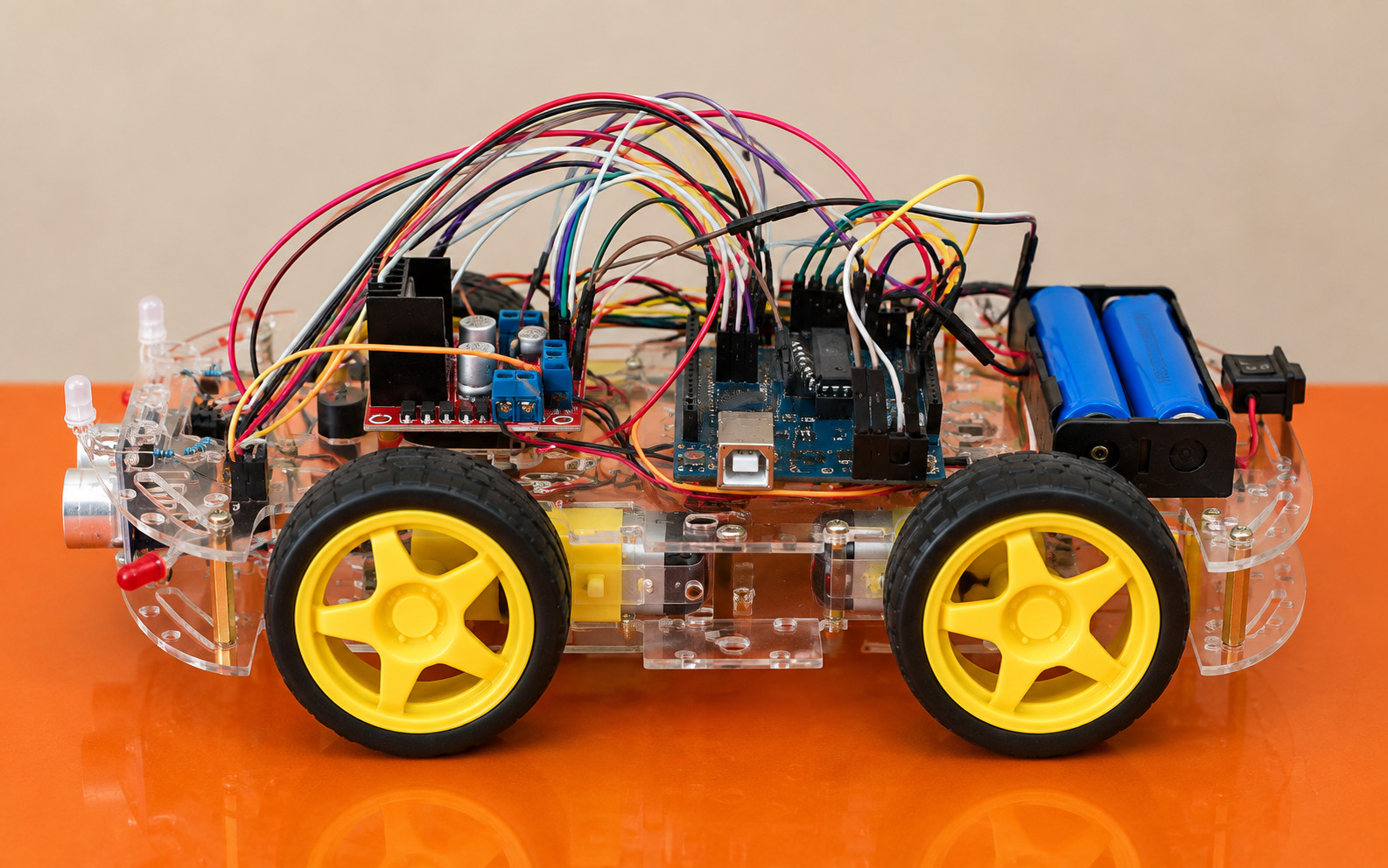
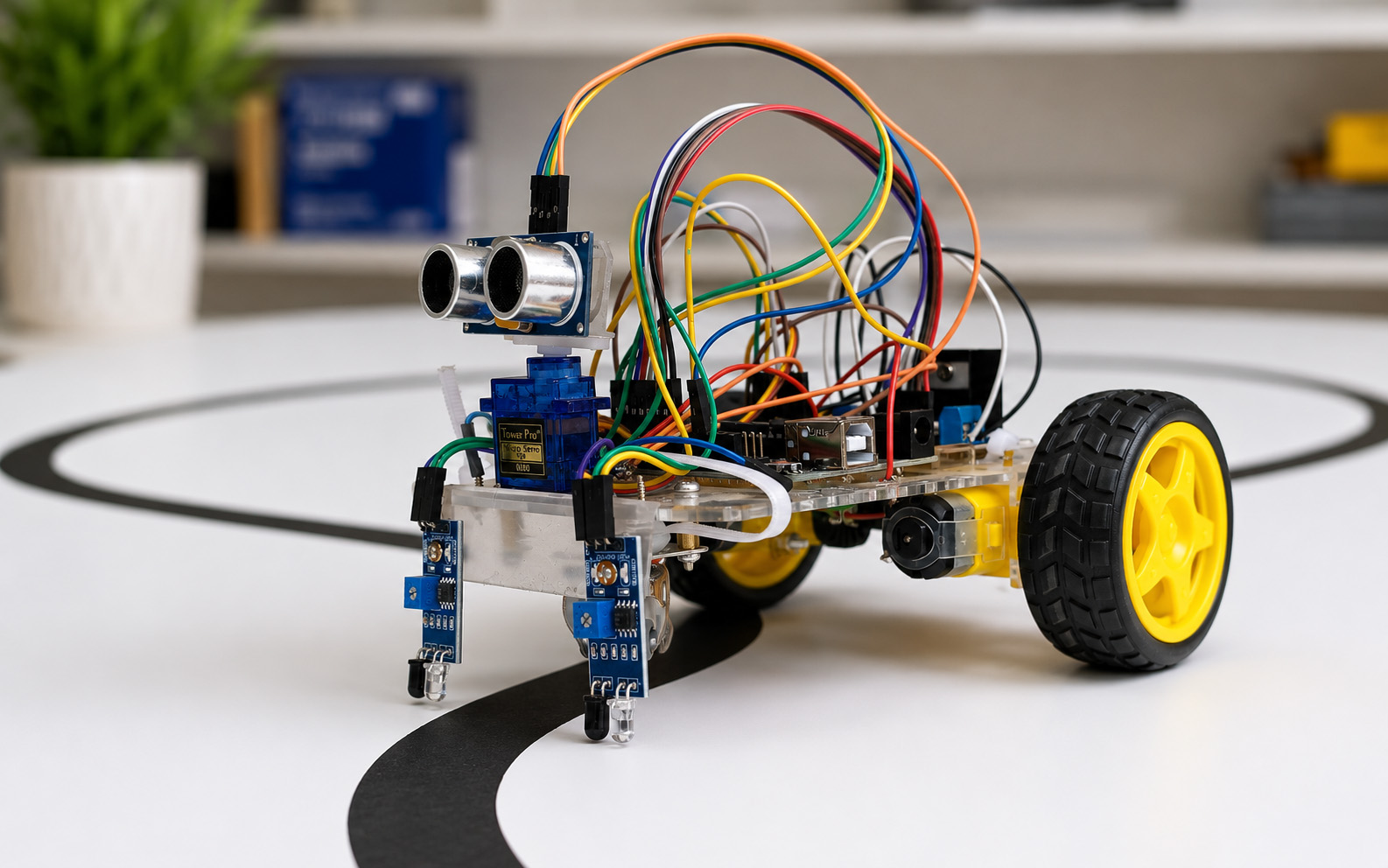
Obstacle Avoider & Line Follower

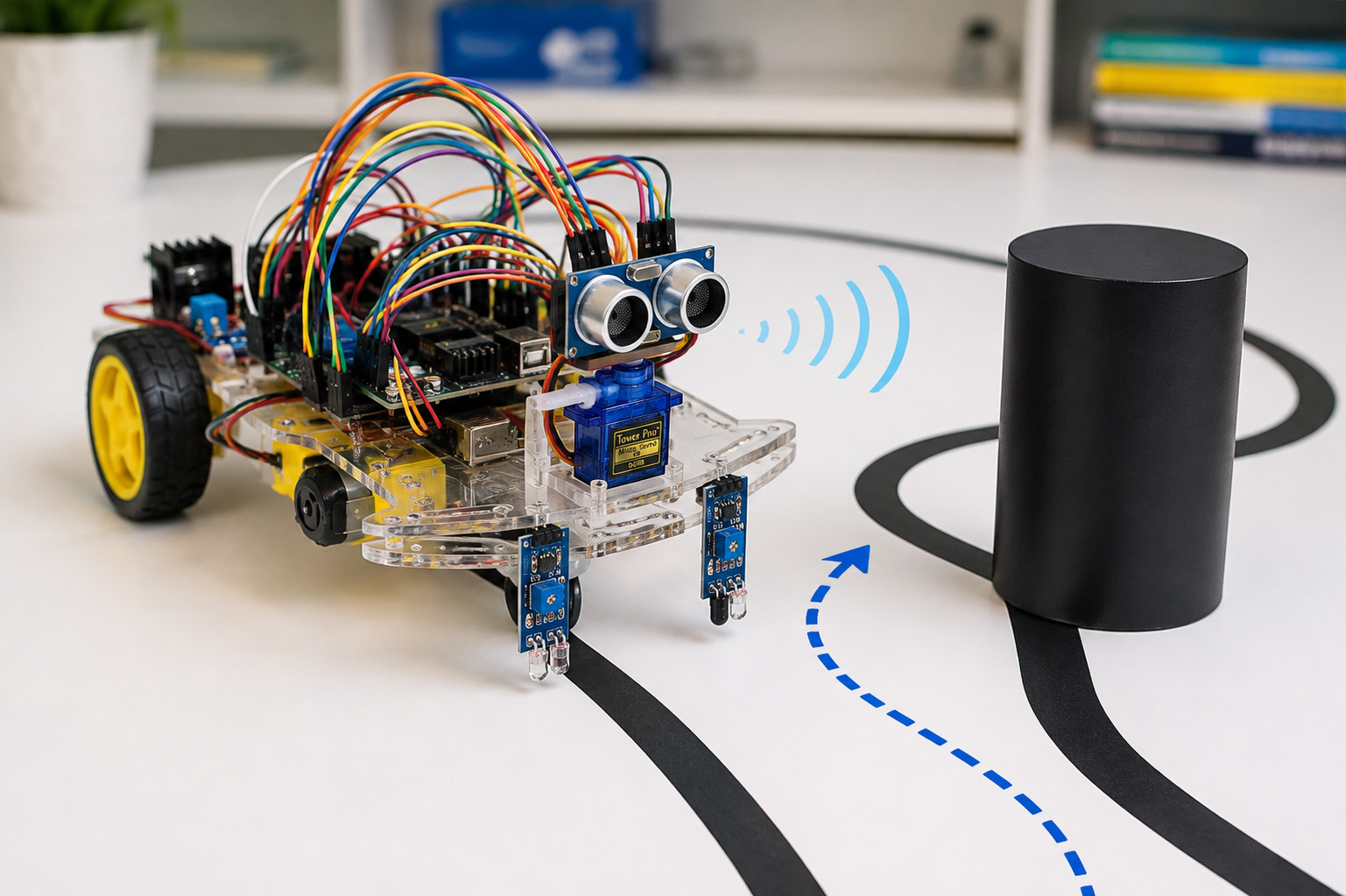
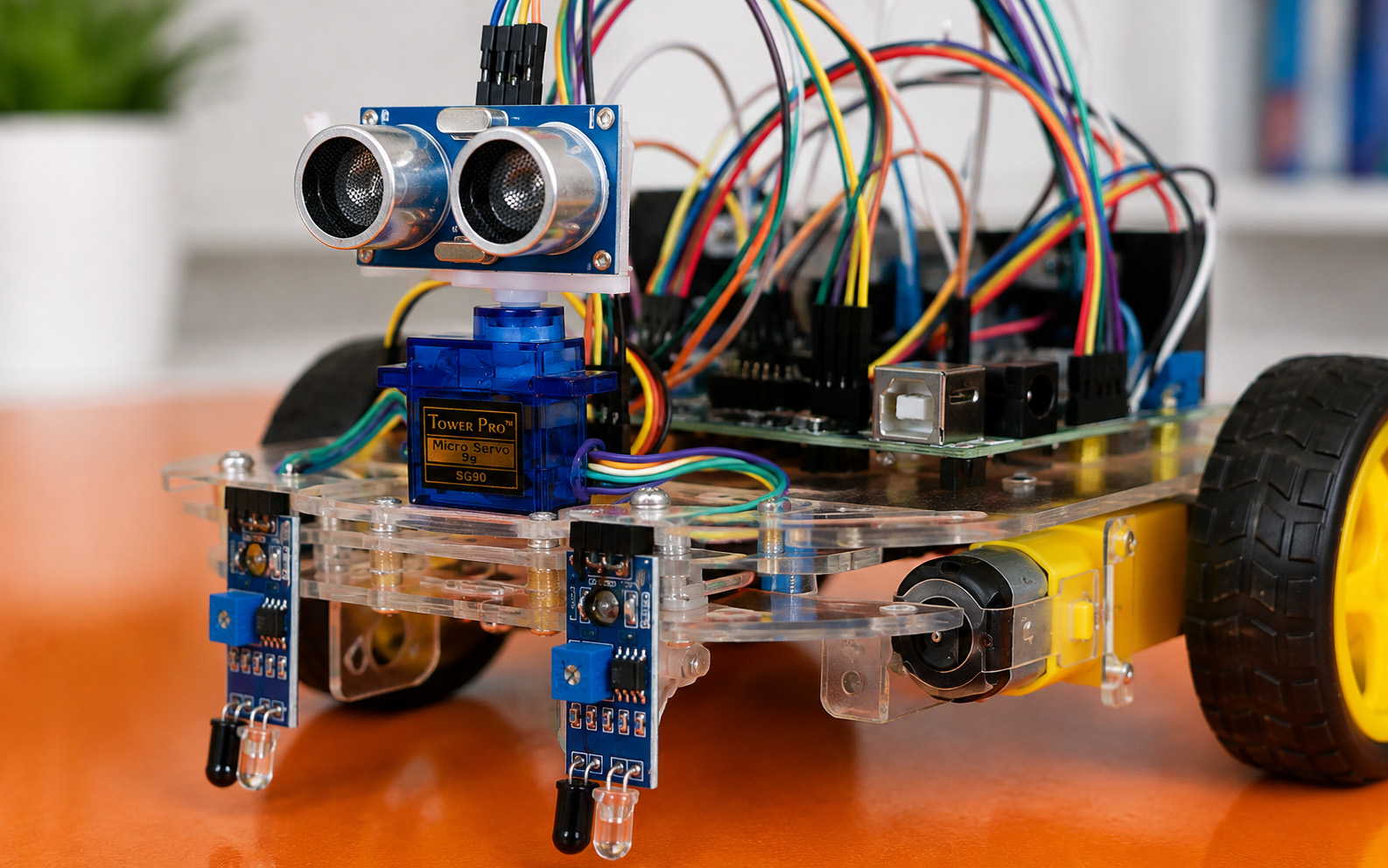
A versatile robot that can be programmed for two key behaviors: autonomously navigating around obstacles and precisely following a black line on a white surface. This project teaches core concepts in autonomous robotics.

Mode 1Obstacle avoidance using ultrasonic sensor
Mode 2Line following with IR sensors
LogicDecision-making based on sensor input
TechArduino UNO, IR sensor array, ultrasonic, motor driver
Explore the Code Logic

What Learners Gain

Sensor Integration

Students learn to use multiple sensors (IR & ultrasonic) and understand their different applications.

Conditional Programming

They write complex if-else logic for autonomous decisions: if obstacle detected, turn right, else follow line.

Calibration & Tuning

Fine-tuning sensor thresholds and motor speeds to achieve smooth performance is a key challenge.

System Thinking

Learners see how combining simple components creates complex, intelligent behavior.

PROJECT 03   SMART LIVING · IOT

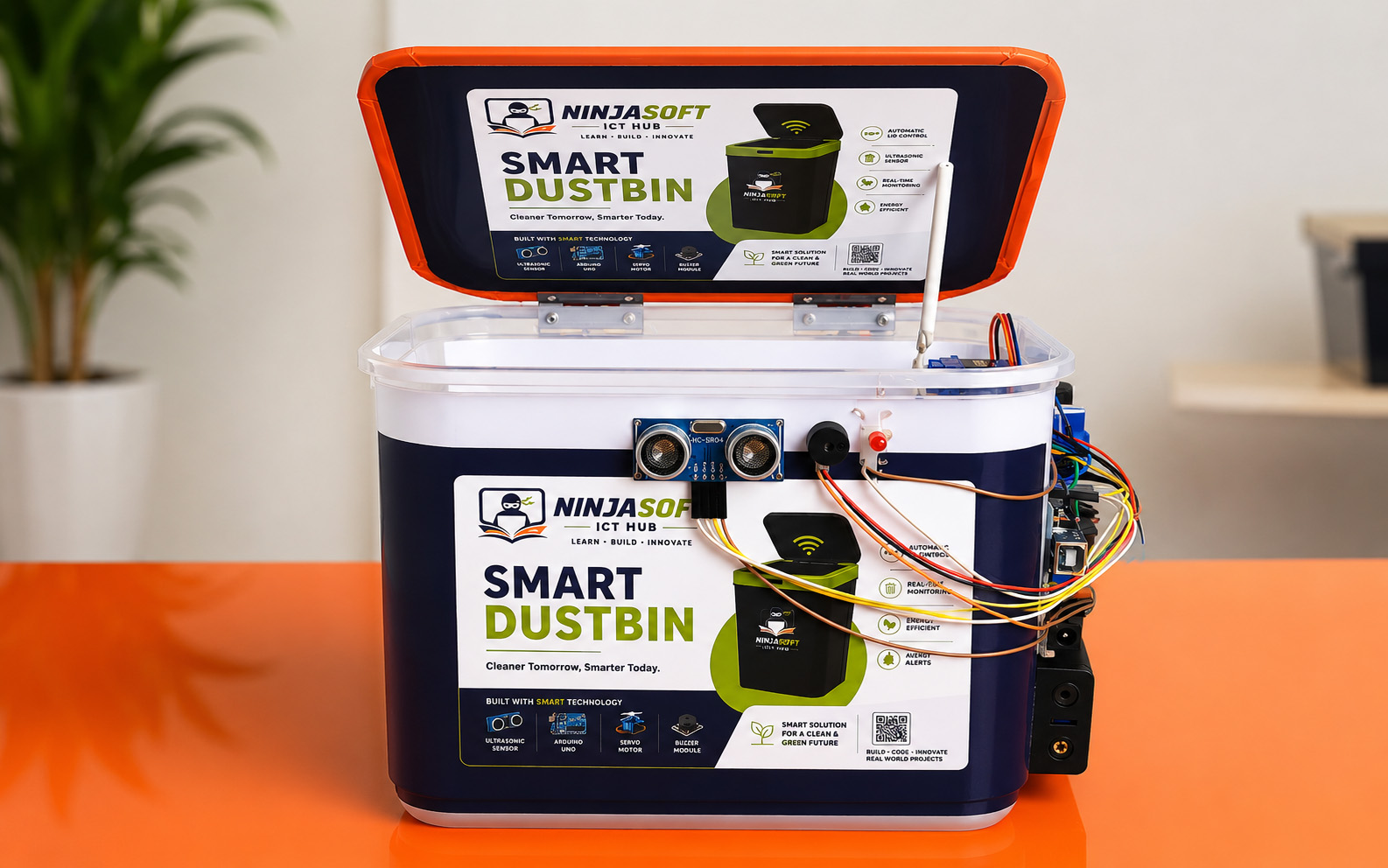
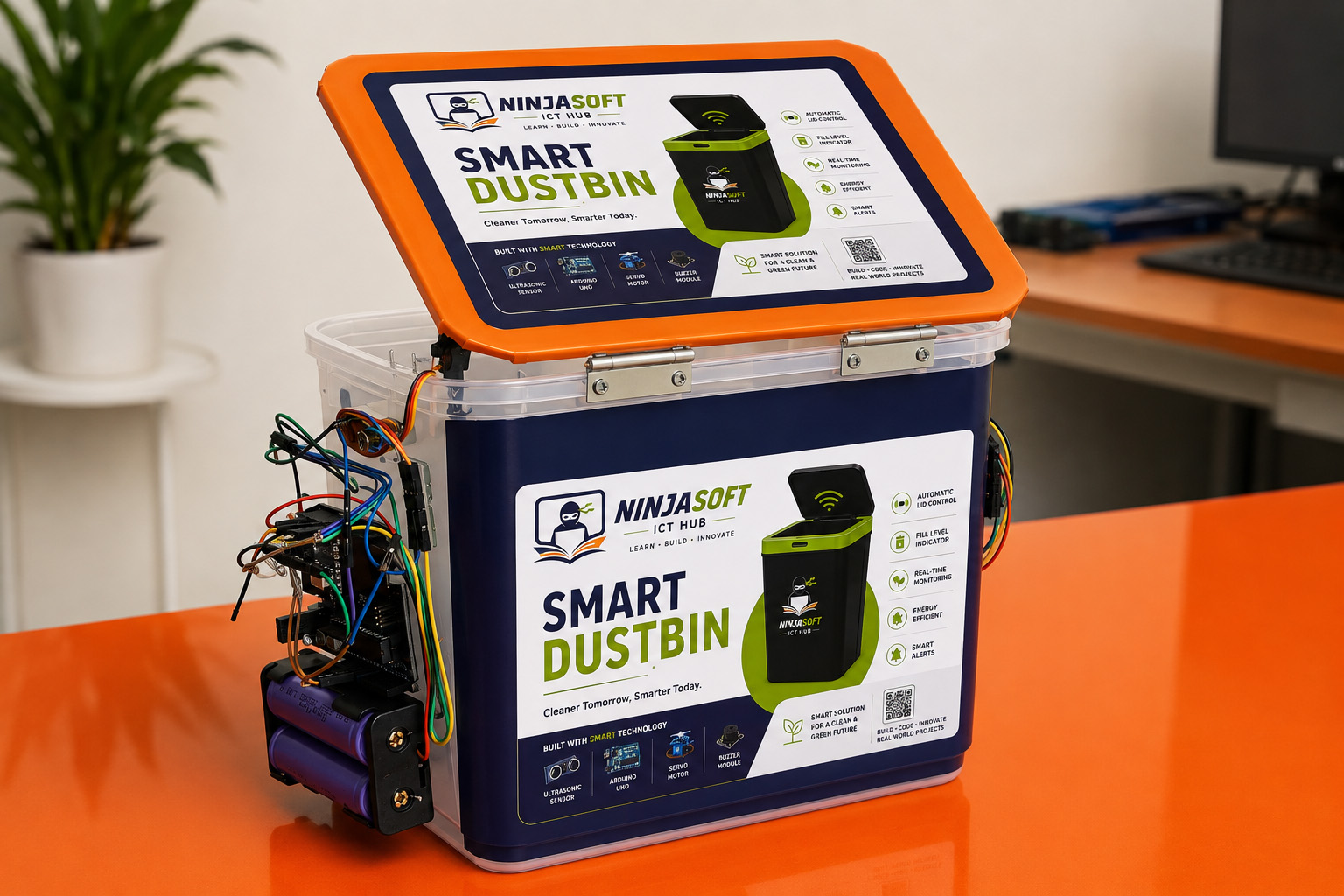
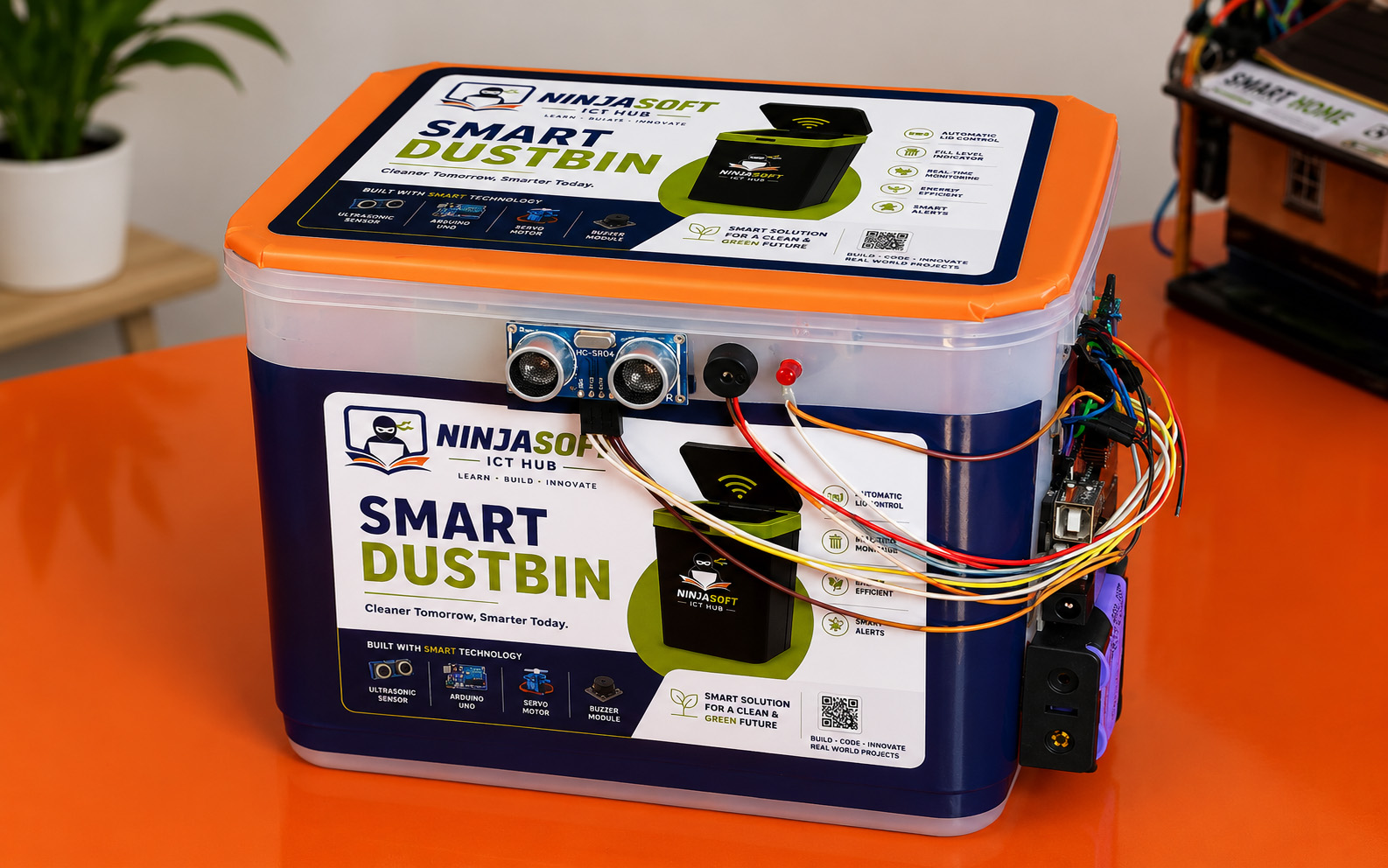
Smart Automatic Dustbin

A touchless, hygienic solution that automatically opens its lid when it detects a hand, and closes after a moment. It also provides visual (LED) and audio (buzzer) feedback. This is the signature Term 1 project for our School Robotics Program.

SensingIR sensor detects hand proximity
ActionServo motor opens/closes the lid smoothly
FeedbackLED indicates status, buzzer beeps on open/close
TechArduino UNO, IR sensor, SG90 servo, LED, buzzer
See the Project Outline

What Learners Gain

Project Lifecycle

From concept to a working prototype, students learn planning, assembly, coding, and testing.

Input-Process-Output

They master the fundamental concept of an automated system: sensor → microcontroller → actuator.

Mechanical Design

Building the lid mechanism introduces basic principles of physics and simple machines.

Practical Application

Learners see how electronics can solve everyday problems, sparking innovation.
PROJECT 04   AUTOMATION · IOT

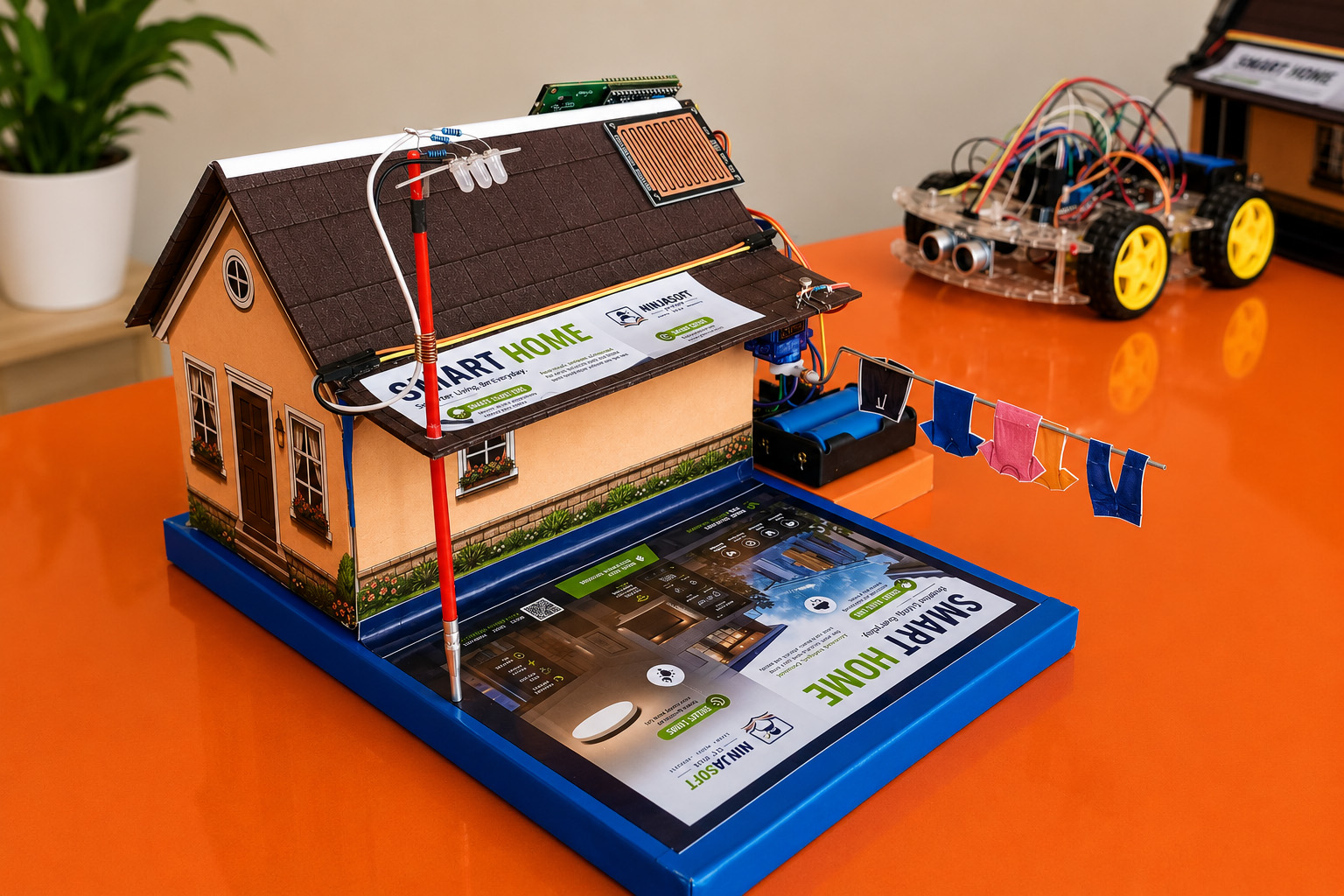
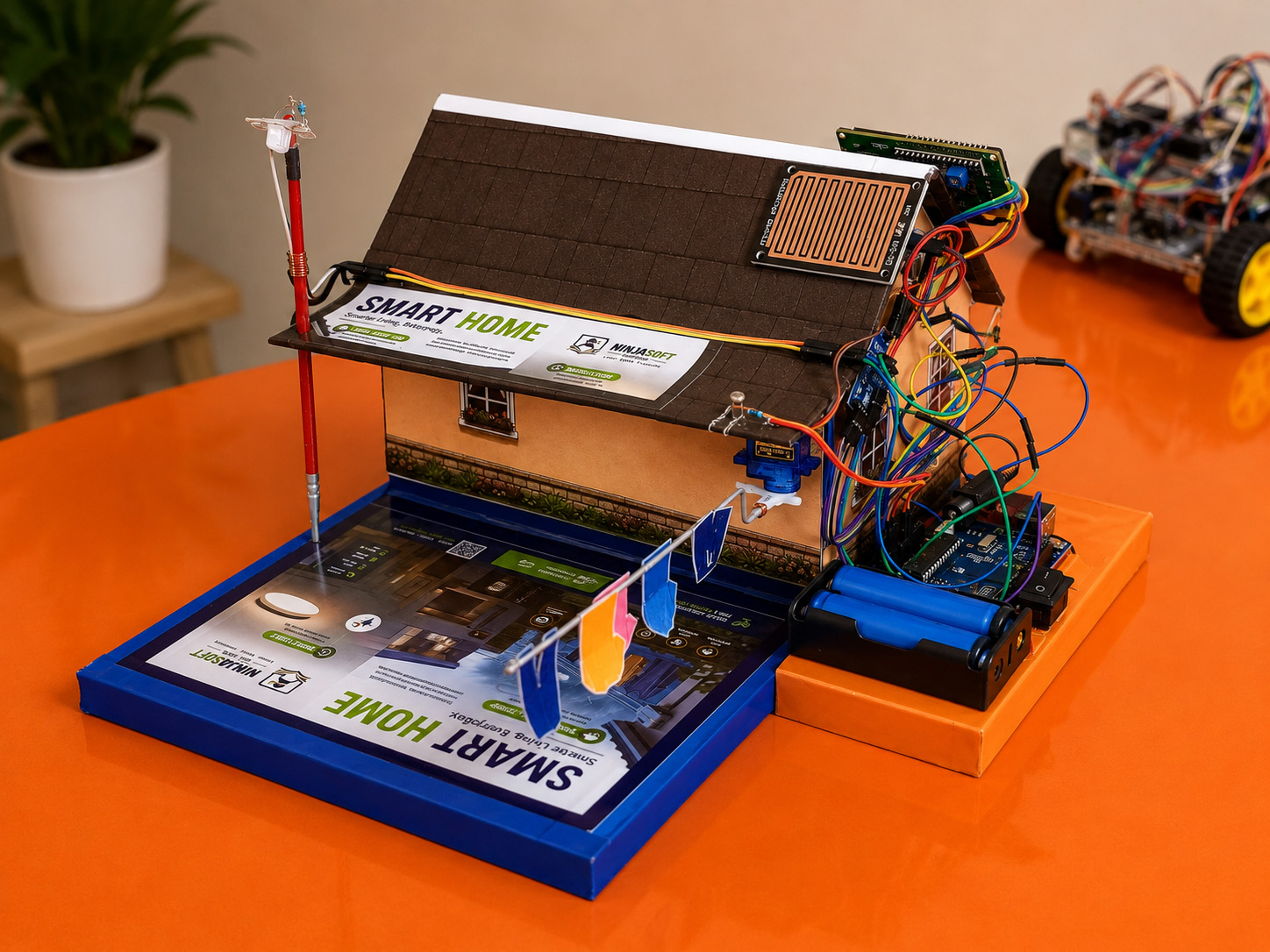
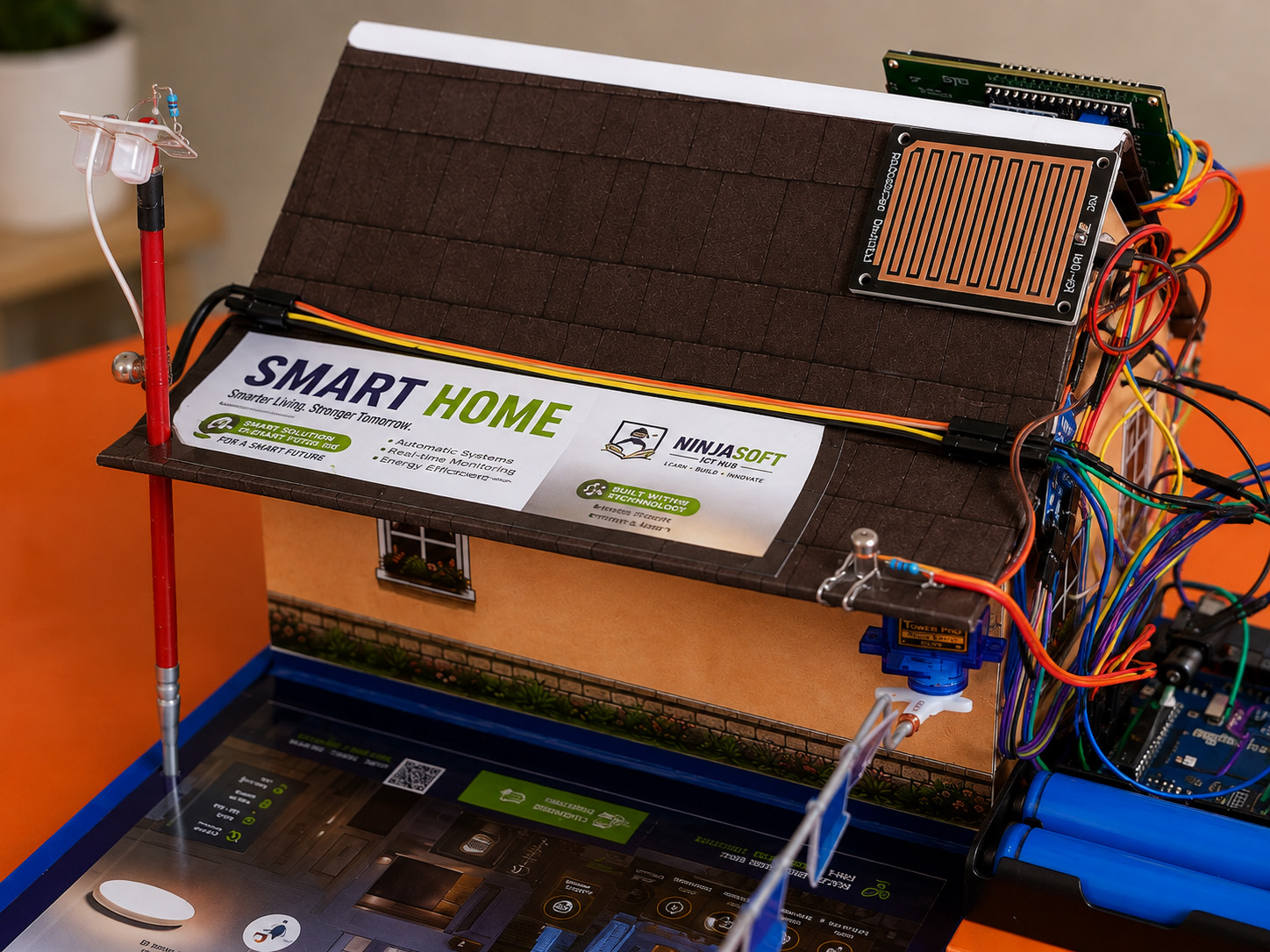
Smart Home Automation System

An integrated model showcasing multiple smart home functions. This advanced project ties together several sensors and actuators to solve real-world problems like energy saving, weather protection, and security.

Auto LightingLDR sensor turns lights on/off based on ambient light
ClotheslineRain sensor retracts and re-extends clothes automatically
Auto GateUltrasonic sensor detects an approaching car and opens the gate
TechArduino, LDR, rain sensor, ultrasonic, servo, relays
Explore the System Design

What Learners Gain

Multi-Component Integration

Learners combine many different sensors and actuators into a single, cohesive system.

Real-World Problem Solving

They tackle practical challenges like energy conservation and weather adaptation.

Advanced Programming

Managing multiple simultaneous tasks requires structured and logical programming.

Systems Architecture

This project teaches how to plan and build a complex system from simpler sub-systems.